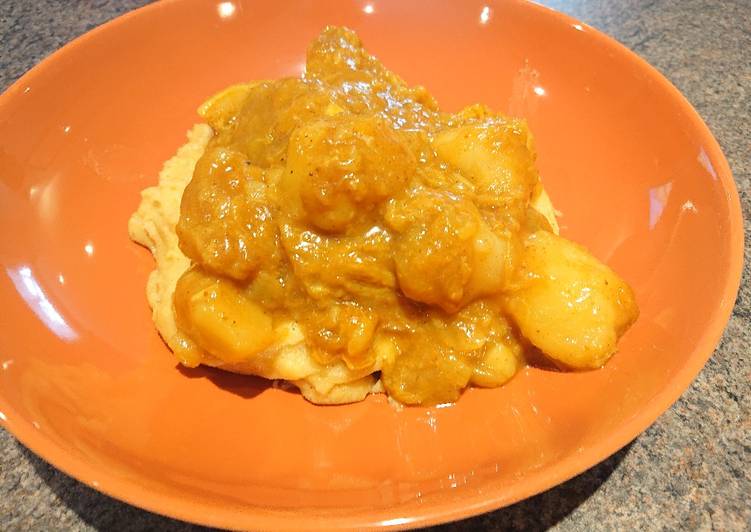
Hi, I am Marie. Today, I will show you a way to make traditional tripe and potato stew recipe. Never skip a recipe of the day again. Here are our most recent easy family recipes to try. Nowadays, I’m gonna make it a little bit tastier. This will be really delicious. Not to mention, it’s super satisfying.
Traditional Tripe and Potato Stew Recipe
Traditional Tripe and Potato Stew is one of the most well liked of current trending meals on earth. It’s enjoyed by millions daily. It’s simple, it is fast, it tastes delicious. They are nice and they look wonderful. Traditional Tripe and Potato Stew is something that I’ve loved my entire life.
To get started with this recipe, we must prepare a few ingredients. You can have traditional tripe and potato stew using 9 ingredients and 5 steps. Here is how you cook that.
The ingredients needed to make Traditional Tripe and Potato Stew:
- Make ready 1 kg tripe (beef or sheep) washed and cut into pieces
- Get Water as needed (enough to cover tripe to start)
- Prepare 4 potatoes, peeled and cut into quarters
- Make ready 1 onion, chopped
- Take 2 garlic cloves, crushed
- Take 2 tbsp curry powder
- Take to taste Salt
- Take Cayenne pepper to taste (optional)
- Make ready 1 packet brown onion soup mix
Instructions to make Traditional Tripe and Potato Stew:
- Cover the tripe with water and simmer for approximately 3 hours.
- Add the potatoes, onions, garlic, curry powder, salt and cayenne pepper. Stir to mix it all in.
- Mix onion soup with a dash of water to form a paste. Add to the stew.
- Add more water as needed if stew starts to dry. Simmer pot for 30 minutes or until potatoes are fully cooked.
- Serve hot over pap or samp.
So that is going to wrap it up for this special dish traditional tripe and potato stew recipe. Thanks so much for reading. I’m sure you can make this at home. There’s gonna be interesting food at home recipes coming up. Remember to bookmark this page in your browser, and share it to your loved ones, colleague and friends. Thanks again for reading. Happy cooking.